Reducing time to trust in competitive Fortnite
Product Designer
No-Code Builder
3 weeks concept to product
Context
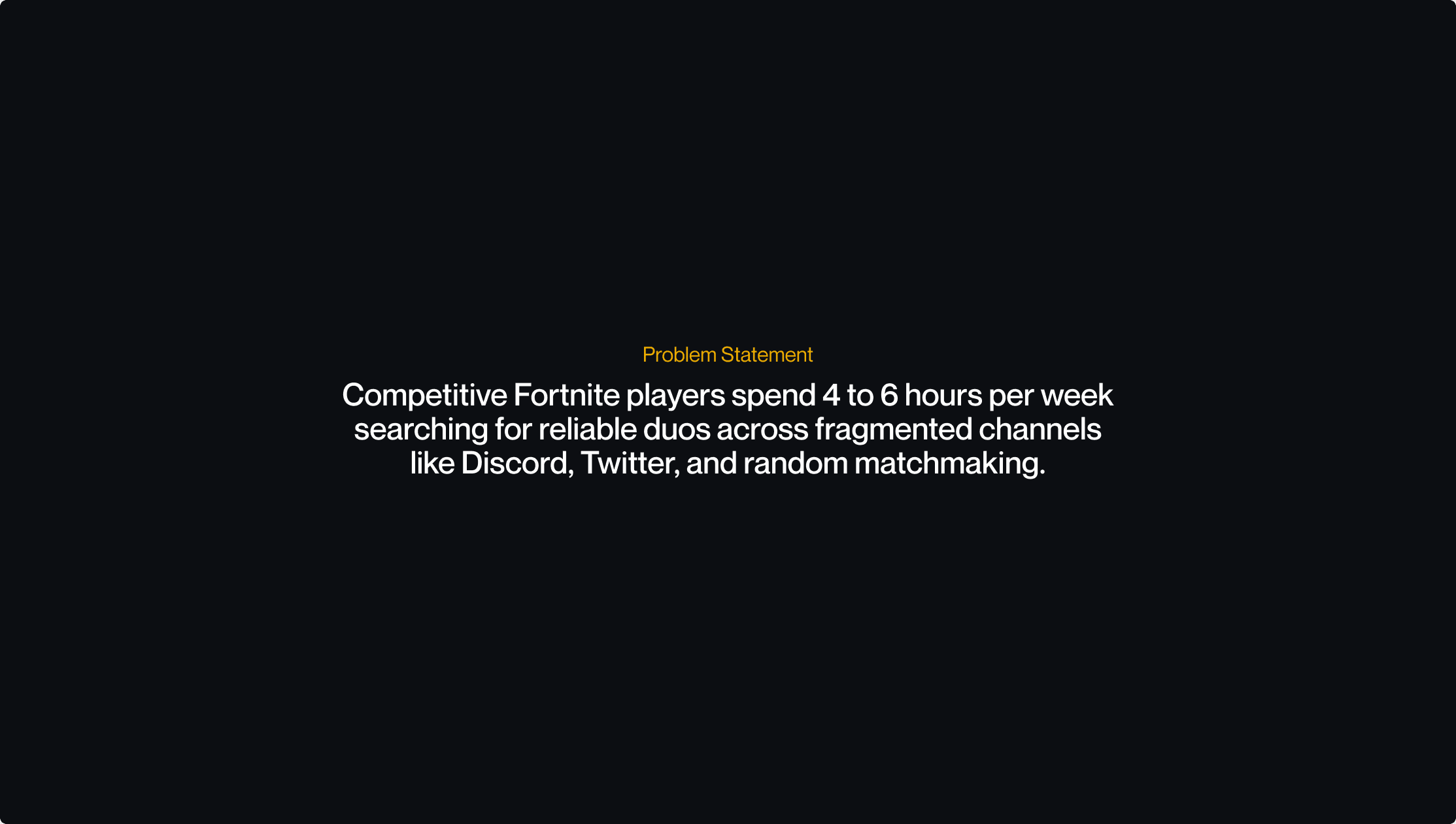
While observing a competitive FNCS player, I noticed that he regularly spent 1 to 2 hours every few days searching for teammates. Even after connecting, several scrims were required to determine whether the skill level and playstyle were compatible.
The issue was the time required to establish trust.
Defining the Problem
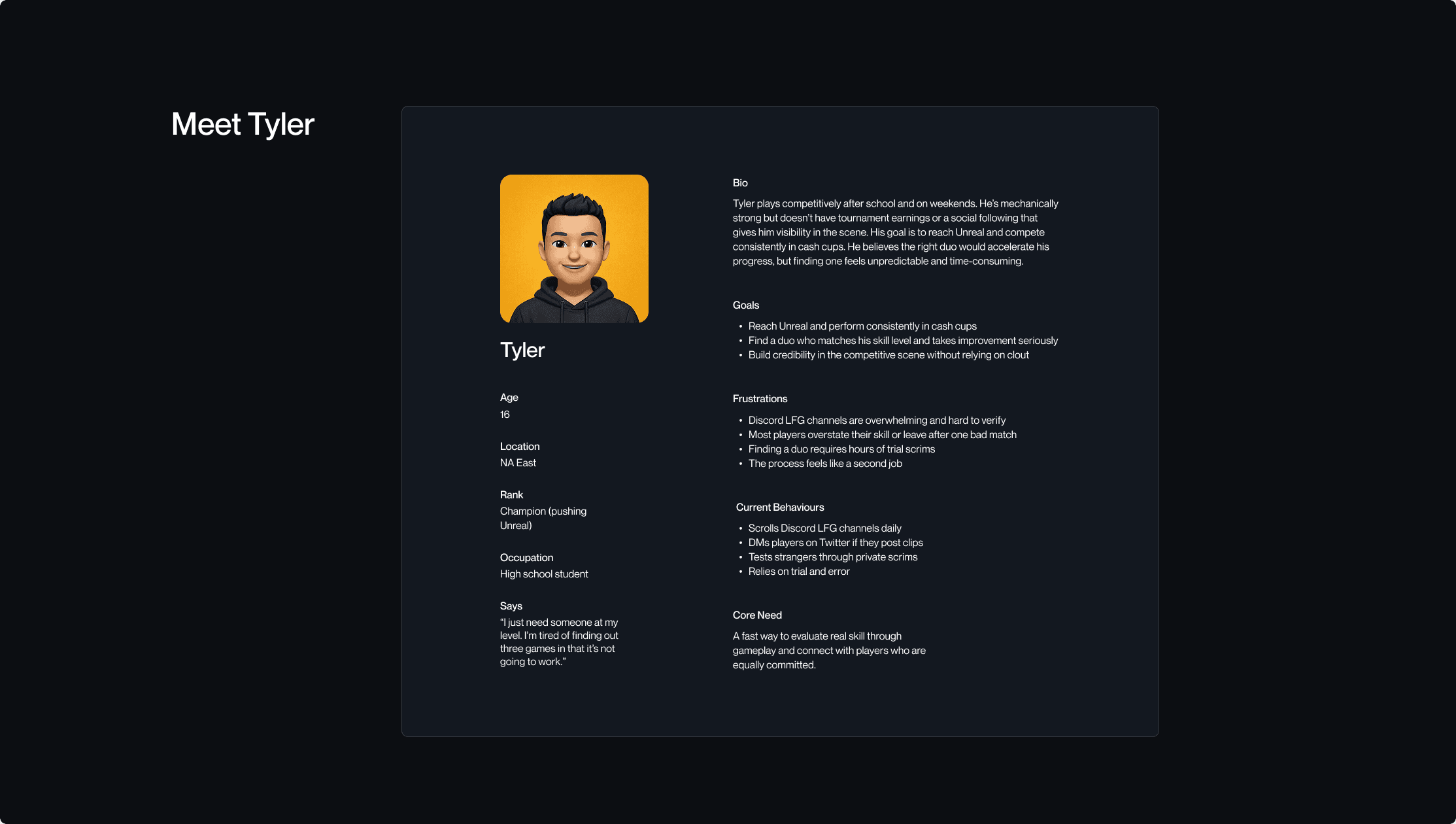
Players need alignment across mechanical skill, in-game decision-making, communication habits, and region proximity to ensure low ping. A mismatch in any of these areas often becomes apparent only after several practice sessions.
Existing tools introduce compounding friction.
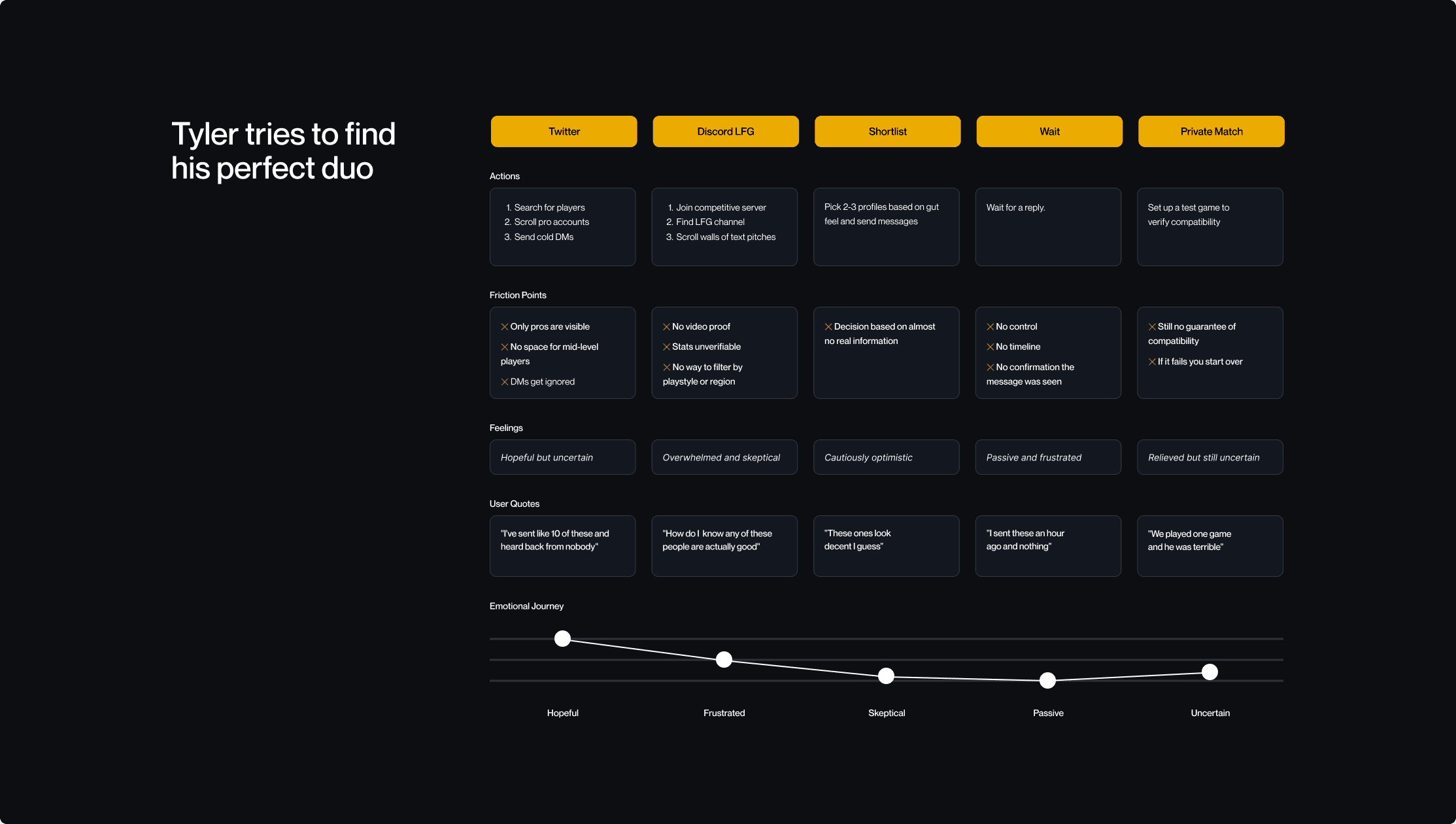
Discord channels are noisy. Messages are quickly buried. Filtering for serious competitors is limited. Performance metrics such as Power Ranking (PR) and earnings are self-reported and difficult to verify. Initiating contact requires repeated cold outreach, and validation still depends on practice games.
Approach
My research began with an interview with a competitive player and their friends, followed by an analysis of Reddit discussions and direct observation of discovery workflows within Discord communities.
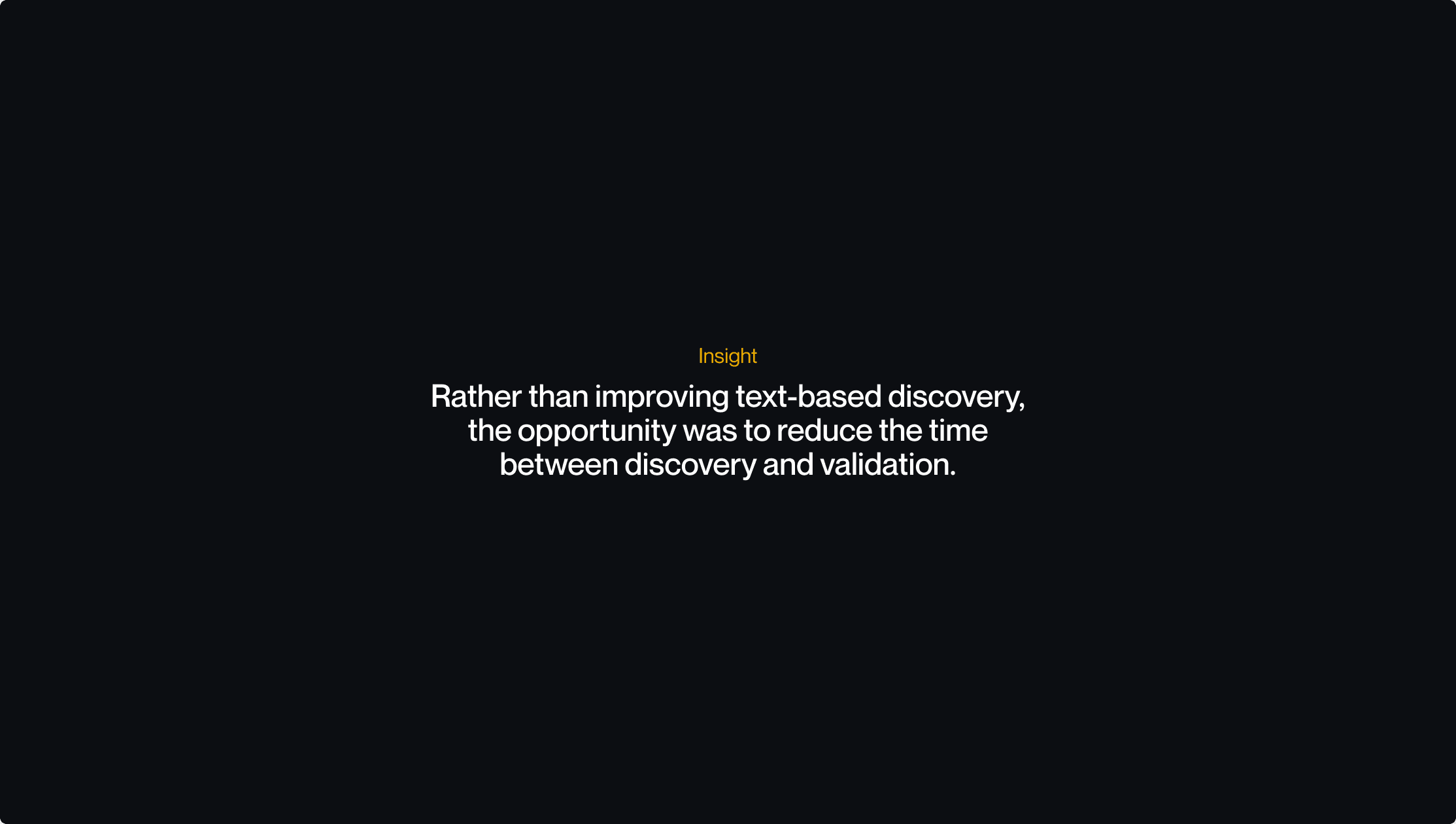
A consistent pattern emerged. Players ultimately evaluated potential teammates through gameplay rather than through written descriptions or statistics. Metrics such as earnings and PR provided context, but clips revealed a player’s consistency, game awareness, and performance under pressure.
Design Decisions
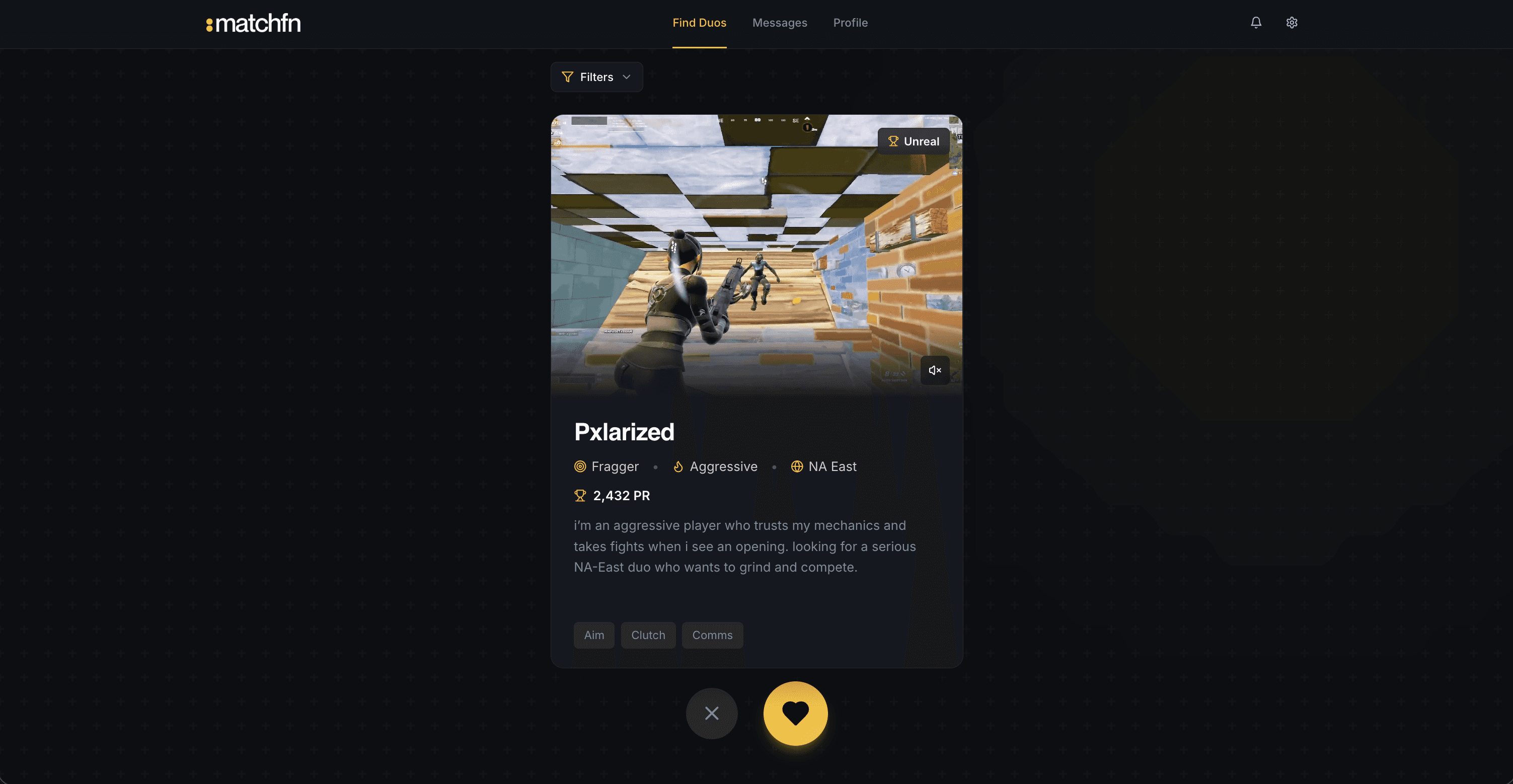
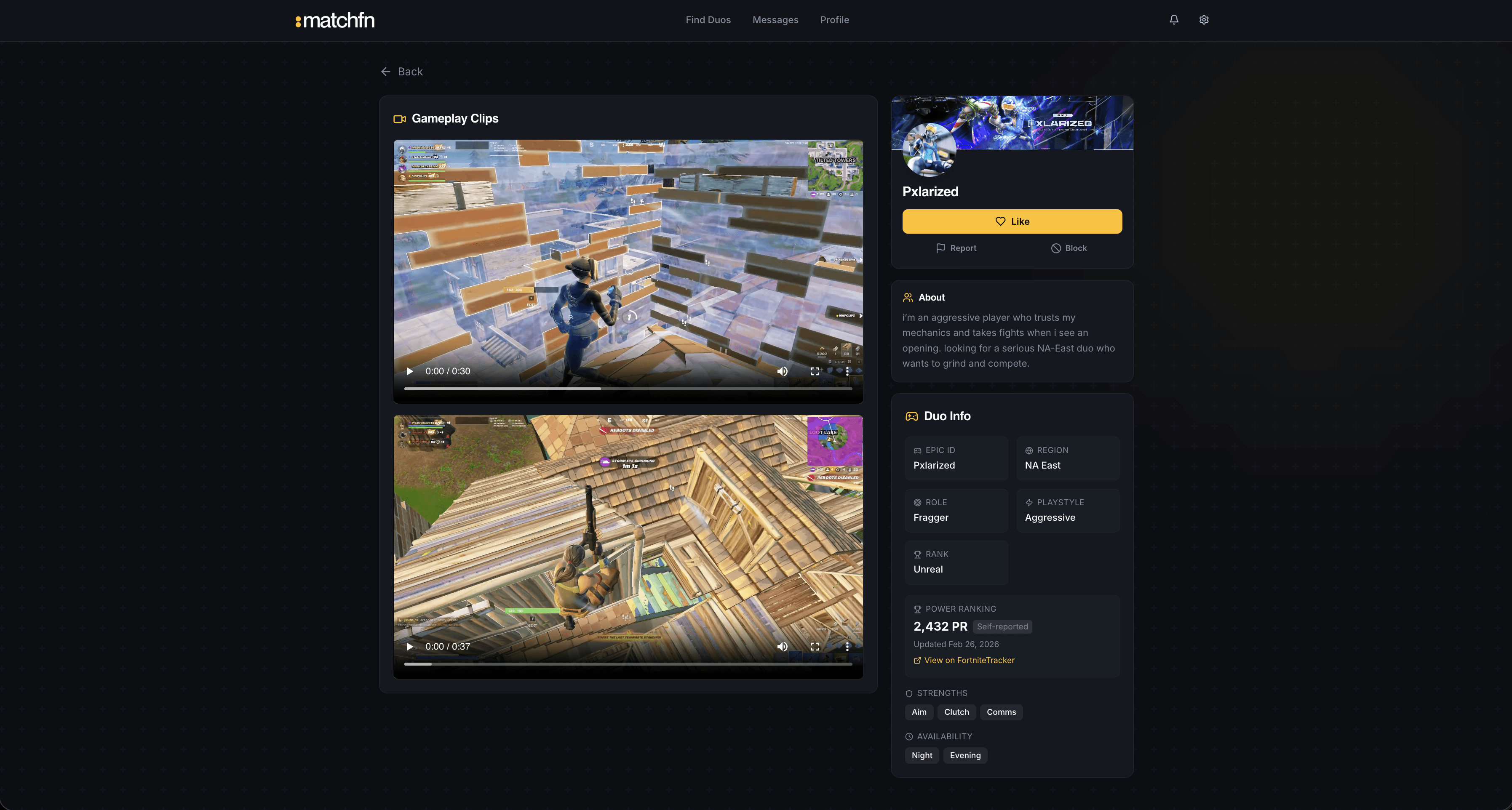
The focus shifted to accelerating trust. Gameplay clips were prioritized as the primary signal, allowing users to evaluate skill. Autoplay eliminated the need to navigate deeper into profiles.
The matching flow replaced open messaging with mutual interest. Instead of sending direct messages, users could express interest through a swipe. Conversation was only enabled once both players showed interest by swiping right on eachother.
The discovery view showed region and key performance metrics, but secondary to gameplay clips. The goal was to allow users to evaluate someones real performance within seconds while still providing additional context.
Solution Overview
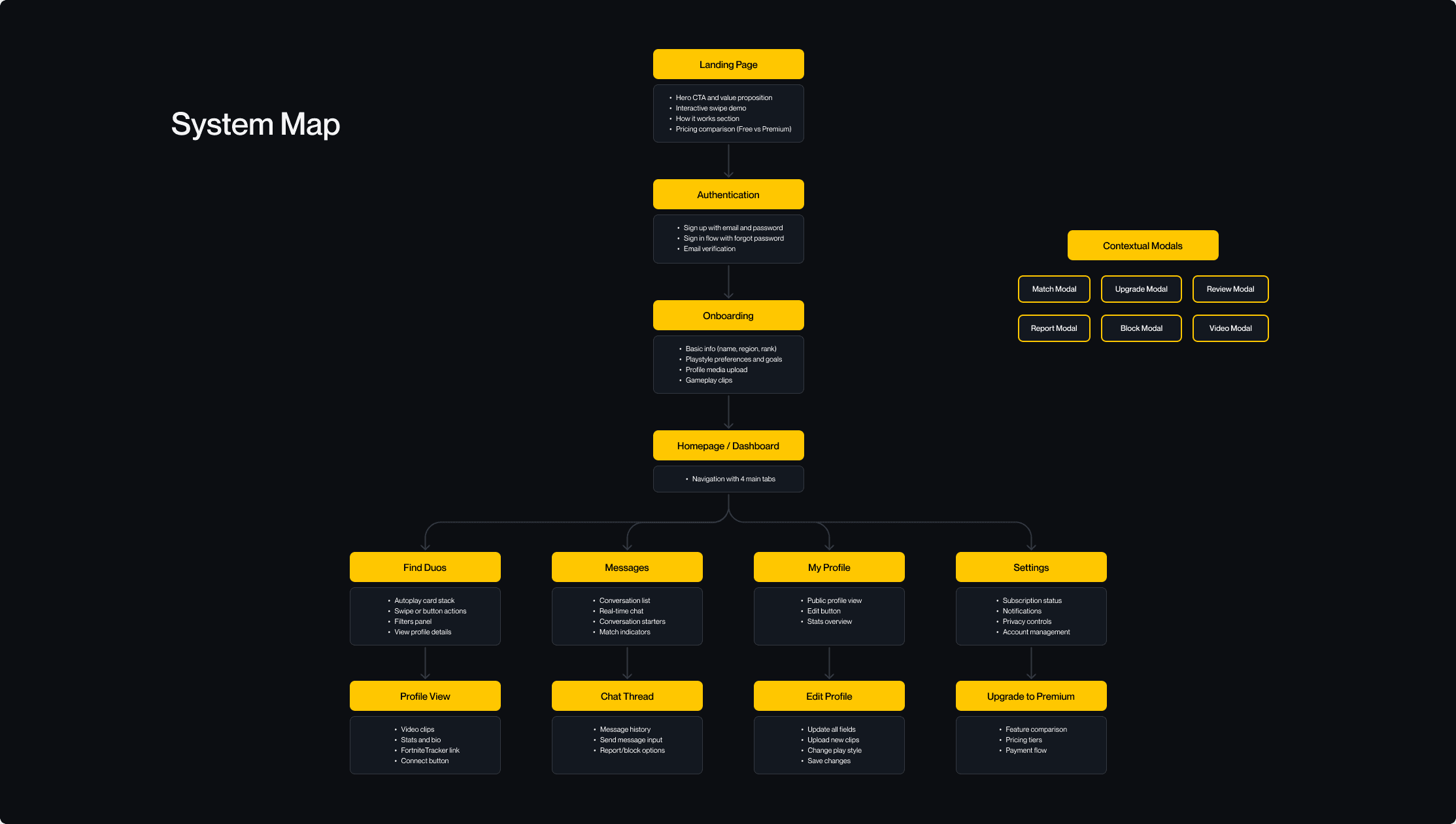
MatchFN introduced a structured matching system. Profiles focused on gameplay clips and competitive preferences. A video-first feed enabled quick evaluation, and conversation was unlocked only after mutual interest was confirmed.
This shortened gap between initial discovery and first scrim by increasing confidence earlier in the process.
Outcome
Early feedback signalled that the frustration was real. Players agreed that finding a good duo was inefficient, and they understood the value of the concept. However, in the end most were not motivated to change their current behaviour.
Despite its flaws, Discord felt “good enough.” Players occasionally found strong teammates through random matches, which reinforced the idea that the existing system eventually works. Because of that, there was little urgency to move to a new platform.
Reflection
This project changed how I think about product design. In matching systems, trust matters more than the amount of information shown. The signals you surface carry more weight than the number of fields or profiles in the system.
It also reinforced that people rarely leave familiar tools, even when those tools are inefficient. Many competitive players acknowledged the problem of unreliable duos, but Discord already worked well enough for most of them.
Good design alone is not enough if the problem is not urgent enough to change behavior.
If I continued building MatchFN, I would focus on tournament earners whose time and performance carry real financial stakes. Testing the product with that group would help determine whether the problem is strong enough to support a dedicated platform.